Can two people share one place in a savings circle?
Yes. Circles have been doing it for as long as circles have existed. The question is not whether it is allowed — your circle decides that — but how to do it without the record turning into a puzzle six months later.
The two shapes
Two people sharing one place. Two sisters, a couple, two colleagues, a parent and a grown child. Each puts in half the contribution, and when that place's turn comes, the pot is split between them. In the pardner tradition this has a name — half a hand — and the same arrangement runs, named or unnamed, in paluwagan, ajo, chama and most other circles. It is how someone joins a circle they cannot yet afford alone, and how a family saves toward one thing under one seat.
One person taking two places. The mirror image. A trusted member contributes double every round and takes two turns in the rotation — a double hand. It is how an experienced member gets a bigger pot without the circle adding people, and it is one of the four ways to grow the pot that we covered when we looked at how many people a circle should have.
Both are legitimate and both are old. Both create the same problem for the organiser: one name no longer equals one contribution and one turn, and the record has to carry the difference.
The one rule that keeps it clean
Everything below follows from a single principle: the circle has seats, and every seat has exactly one name of record.
A shared seat still has one person the circle deals with, responsible for the full contribution arriving on the day, in one piece. How the pair settle between themselves — half each, sixty-forty, whoever has it that week — is their business and stays outside the circle's book. When the turn comes, the pot goes to the name of record, and the split happens on their side of the line.
A double seat is simpler still: the same name appears twice in the rotation, each a full seat with a full contribution and its own turn.
Organisers who run into trouble with shared places almost always broke this rule with the best of intentions — two half-payments, two names against one seat, and six months later two people who don't agree about who paid when. Keep the seat whole in the book. Let the sharing happen outside it.
What to write down at formation
The moment to settle a shared or double seat is before the first contribution, not at the first turn. Four lines in the circle's book do it:
Who holds the seat. One name. If two people share it, name the one the circle will chase and the one the pot goes to — usually the same person.
Whether the seat may be split at payout. Some circles are happy to pay a shared seat's pot into two hands on the day; most prefer to pay one and leave the split to the pair. Decide which, and write it down.
Where a double seat sits in the order. Two turns for one person can fall together or far apart. Circles that draw the order usually treat them as two separate draws; circles that agree the order usually put the second seat in the second half, so nobody holds two early advances at once.
What happens if one half stops. The line most circles skip, and the one that matters most. If one of the pair stops paying, the name of record is still responsible for the full amount. Say so at formation, warmly and clearly, so nobody discovers it mid-cycle.
A few honest trade-offs
Shared seats are good for joining, less good for leaving. If the pair wants out before their turn, it is one exit, not two, handled the way any early exit is handled — someone takes the seat, or the pair stops contributing and is settled at cycle close. If they want out after their turn, it is the non-payment problem, and it falls on the name of record. That is simply what one name of record means.
Double seats concentrate risk. A member with two seats owes the circle twice as much at every stage. Most circles only offer one to someone with a completed cycle behind them, and an organiser is right to say no to a first-timer who asks.
Neither shape changes the circle. The amount, the interval, the payout order — none of it moves. A shared or double seat is a note against a seat, not a new kind of circle. That is why the record can carry it.
Where Roscas comes in
Roscas is a free app for running the circle you already have — and a circle with a shared seat or a double seat is still that circle.
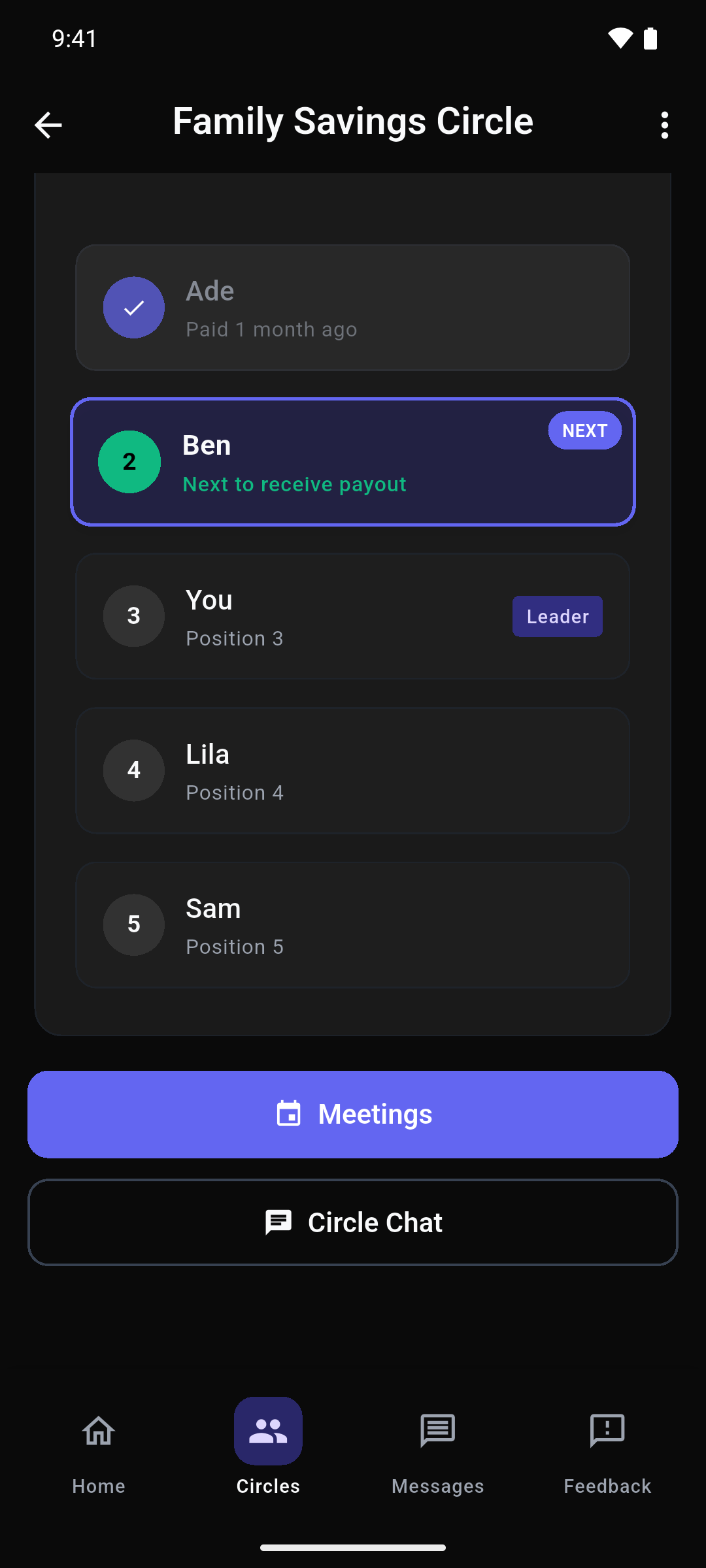
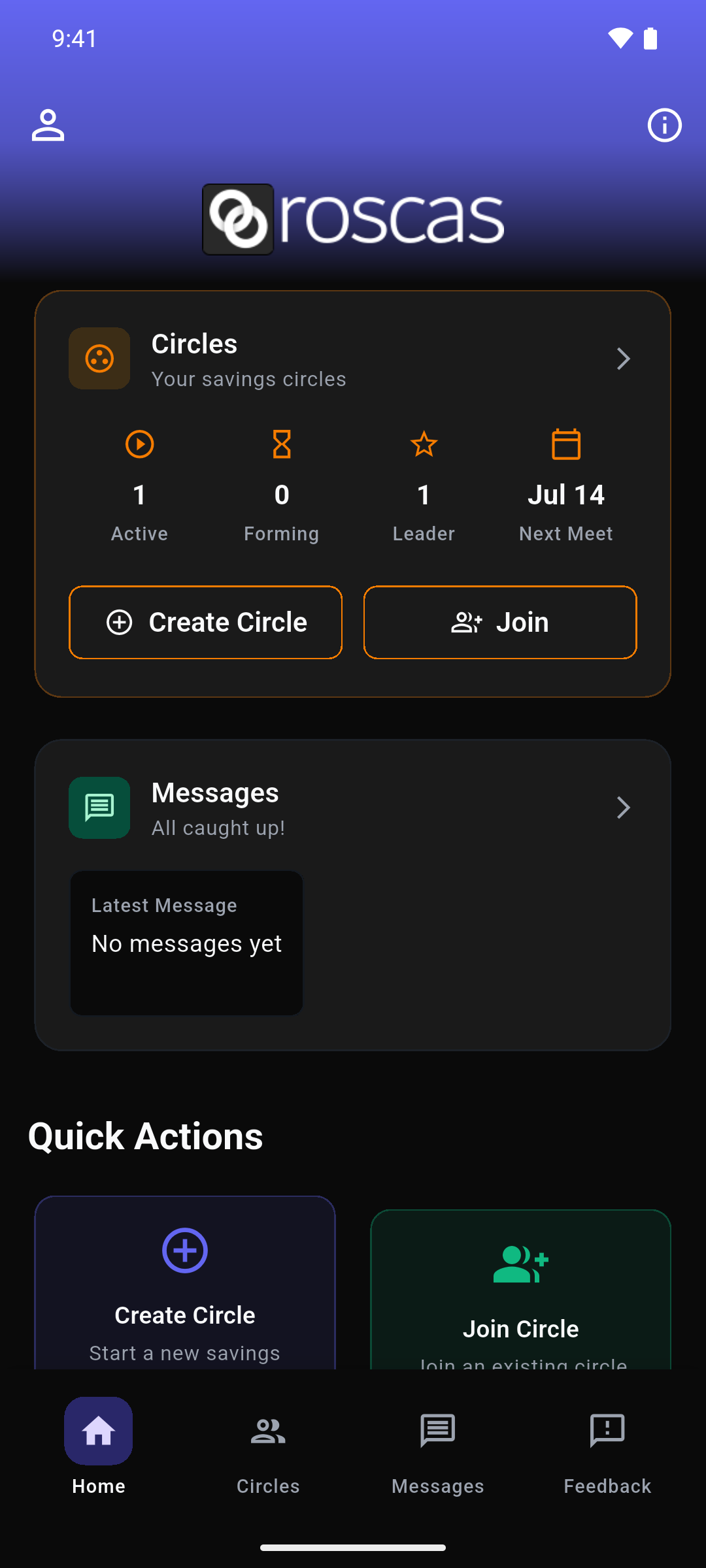
The app keeps the seats exactly as your circle defines them: one name of record per seat, one contribution per round, one turn in the rotation. A member holding two places appears twice in the order, with two contributions to show and two turns to wait for. A shared seat is recorded under the name your circle chose; who shares it is written where you keep the rest of your formation decisions. Everyone can see whose turn is next and which seats have paid — in a circle with a doubled name in it, the question that otherwise gets asked twice.
Three things are worth saying plainly.
Roscas never touches the money. Contributions and payouts move exactly as your circle moves them now — cash, bank transfer, standing order. Nobody connects a bank account to join. How a shared seat splits its pot is settled between the two of them, as it always was.
Roscas doesn't rate your members. No reliability scores, no offers or deals pushed at your circle, nothing sold to your members through the app. The record says who has paid; what your circle makes of that is your circle's business, and no company sits between you and the people you save with.
Roscas is free, permanently — for the organiser as well as the members. No fee per circle, no per-seat charge, no paid tier waiting for anyone who runs more than one circle.
Roscas is in beta on Android, and we are inviting organisers to bring the circle they already run — shared seats, double hands and all, exactly as they stand.
Keep your circle. Lose the spreadsheet. Get started at roscas.io/your-circle