How many people should be in your savings circle?
It is the first thing a new circle argues about and the last thing anyone writes down. Six people? Twelve? Everyone who asked to join?
Whatever tradition you are running — a paluwagan, an ajo or esusu, a chama, a dhukuti, a pardner hand — the number of members is not a headcount. It is the single decision that fixes almost everything else about how the circle will feel to be in.
The arithmetic nobody writes down
Two lines, and they settle the rest:
Members × contribution = the pot. Members × interval = the length of the cycle.
Ten people at £100 a month is a £1,000 pot and a ten-month cycle. Twenty people at £100 a month is a £2,000 pot — and a cycle that runs into a second year, with someone waiting twenty months for their turn.
You cannot grow the pot without growing something else: either the contribution goes up, or the wait does. Every argument about circle size is really an argument about which of those three the group is willing to move — and it goes better when everyone can see that plainly rather than sensing it.
What the number is really choosing
The pot. More members, more money at each turn. This is why people want big circles, and it is a good reason.
The wait. An early turn is effectively an interest-free advance; a late turn is pure saving with a lump sum at the end. Both are fine — and both get more extreme as the circle grows.
The exposure. The last member depends on everyone ahead of them still being there when their turn comes. In a ten-month circle that is nine people for most of a year; in a twenty-four-month circle it is twenty-three people for two years, through job changes and house moves. Longer circles are not riskier because people are less honest. They are riskier because life is longer.
The admin. The record grows in step with the members. The chasing grows faster, because it is driven by how many people can be late at once.
The sizes circles actually land on
Small — roughly four to eight. Finishes fast, often inside half a year, and everyone genuinely knows everyone. The pot is modest, which is right when the goal is modest: a course deposit, a flight home, a new washing machine. The best shape for a group's first circle together.
Middle — roughly nine to fifteen. The shape most traditions settle into: a monthly circle completes inside a year and the pot is large enough to matter. It is also the point at which the organiser stops being able to hold it all in their head.
Large — sixteen and up. These work, and always have — but look at where they work. Behind almost every long-running large circle is something already holding the group together: a church, a workplace, an association, an extended family. That institution does part of the job familiarity does in a small circle. If your group has it, go ahead. If it does not, the size is borrowing trust the group has not built yet.
Four questions before you fix the number
1. What is the pot actually for? Work backwards from the goal, not forwards from the guest list. If members want £800 each, you do not need twenty people — you need to solve for £800 and stop.
2. How long will everyone realistically stay together? Workplace circles are the ones to watch: a group that feels permanent in March can lose three members to new jobs by Christmas, and they will still owe their contributions.
3. Would member twelve vouch for member three? In most circles trust runs through the organiser rather than between every pair of members — people join because they trust you. That works, but it means a bigger circle asks more of your judgement, not less.
4. Can you actually run it at that size? The honest answer sets a ceiling, and there is no shame in it. Two circles of eight, run well, beat one of sixteen run at the edge of what one person can carry.
Four ways to get a bigger pot without a bigger circle
Shorten the interval. Ten members contributing weekly is a ten-week cycle rather than a ten-month one — same people, same pot, a quarter of the calendar wait. Weekly contributions suit weekly wages, which is why so many circles run that way.
Raise the contribution instead of the headcount. Eight at £150 beats twelve at £100 on both pot and cycle length. One caution worth more than the rest of this article: set the amount at what the least comfortable member can manage every round, not at what the most comfortable member suggests.
Run two circles rather than one big one. Two groups of eight, side by side or one after the other, serve sixteen people while keeping the trust dense and the admin sane.
Let a trusted member take two slots. Common in many traditions, and it works — but be honest about what it is. That member contributes double every round and owes two turns of obligation, so it suits someone with a completed cycle behind them.
When in doubt: smaller and shorter
A first circle has a job beyond the money: to finish. A completed cycle makes the next one easy to fill — people paid out on time recruit for you without being asked. You can always run it again, bigger.
Where Roscas comes in
Roscas is a free app for running the circle you already have — and for the one whose size you are about to set.
It does not decide your number, and it should not. What it does is make the consequences visible before anyone commits: set the members, the amount and how often, and the whole thing lays out in front of you — the pot, every turn in order, and the date the last member gets paid. That last date is answered in advance rather than discovered in month nineteen.
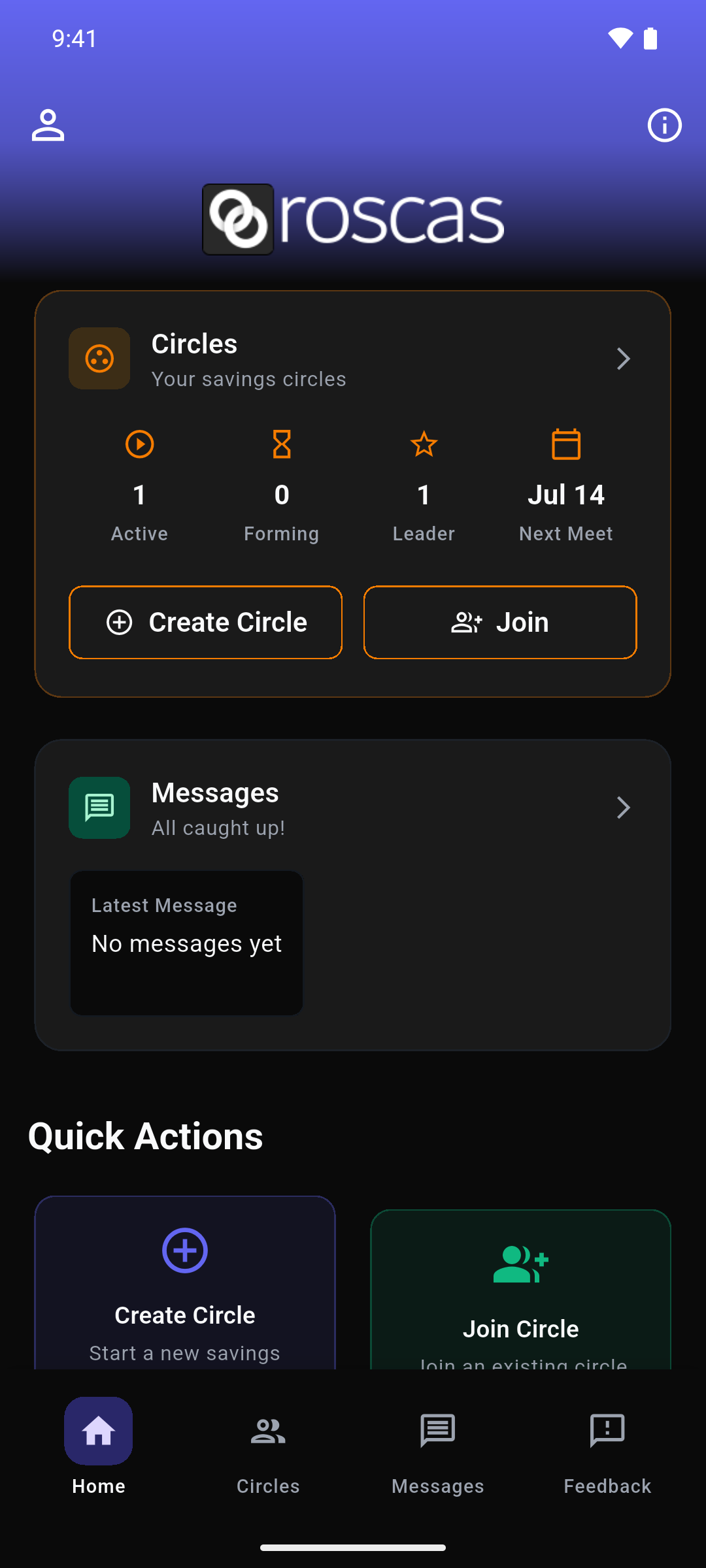
Whatever size you land on, the record scales with it. Every member sees who has paid, whose turn is next and what was agreed at the start — so the questions that multiply with membership answer themselves, and the chasing gets lighter.

Two things worth saying plainly. Roscas never touches the money — contributions and payouts move exactly as your circle moves them now, cash or bank transfer, and nobody outside your circle takes a cut. And Roscas is free, permanently: no fee per circle, no subscription, no charge appearing once you have settled in.
Roscas is in beta on Android, and we are inviting organisers to bring the circle they already run — your members, your amount, your order, exactly as they stand.
Keep your circle. Lose the spreadsheet. Get started at roscas.io/your-circle