Running an Ajo or Esusu? Keep Your Circle, Lose the Spreadsheet
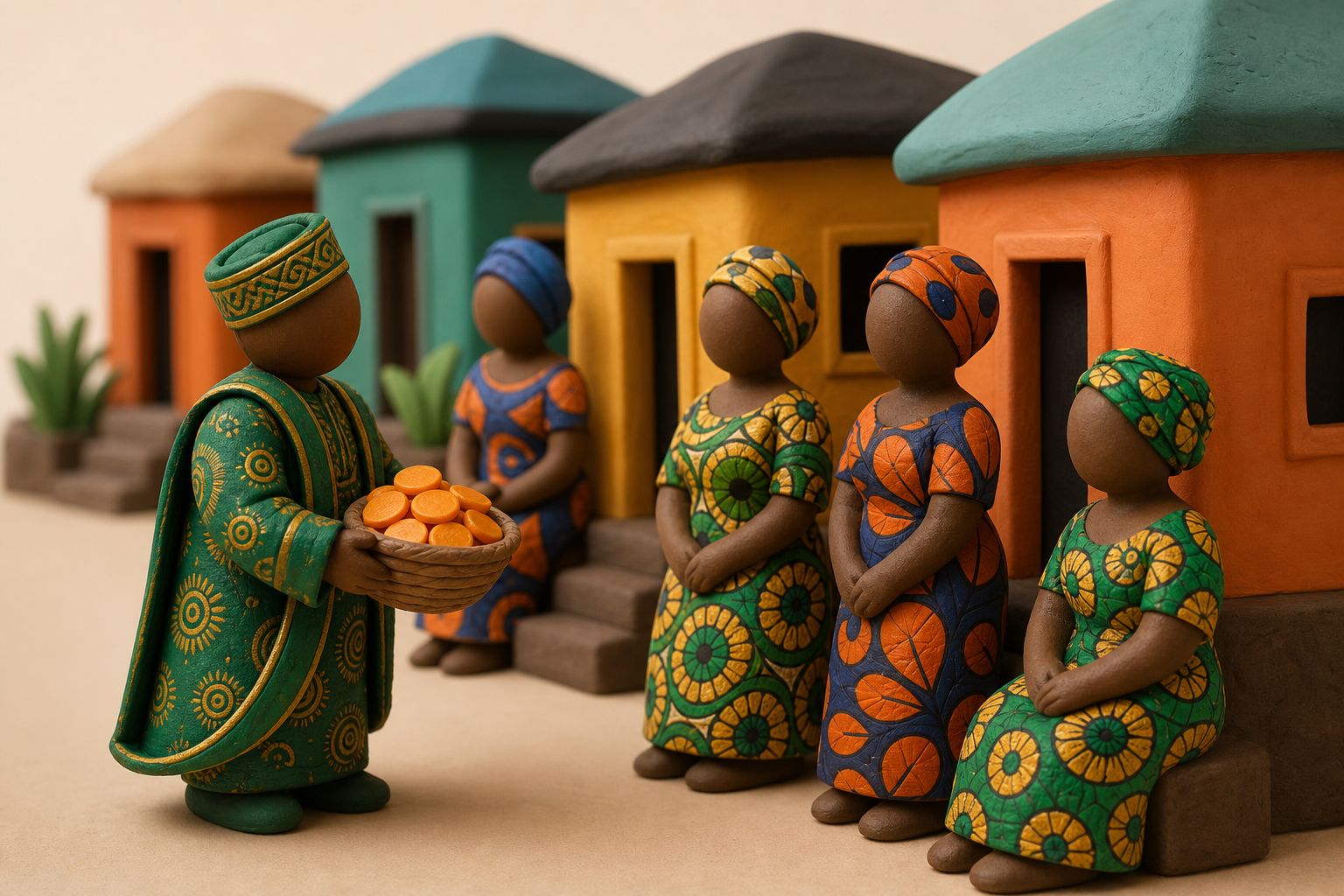
Call it ajo, esusu, isusu or adashe — the names change across Nigeria's communities, but the idea is the same everywhere, and it long predates any bank. A group of people who trust each other contribute a fixed amount on a fixed rhythm, and each member takes their turn to collect the whole pot. No interest, no credit checks, no forms. It has funded shop stock in Lagos, school fees in Ibadan, and house deposits in London — because the tradition travelled with the people who carry it.
And wherever it travels, one thing travels with it: somebody has to keep the records straight. If you're that somebody, this is for you.
The collector's burden
Back home, larger ajo groups sometimes have a dedicated collector — the alajo — who goes door to door and is paid for the trouble. But most circles among friends, family, colleagues and church members don't work that way. One trusted person volunteers to hold everything together, and is paid in nothing but goodwill.
If that's you, you know the real shape of the job. You keep the list of who has paid and who hasn't. You remember that Ngozi paid two rounds ahead before her trip, and that Tunde asked to swap his turn with Bisi's in October. You send the reminders — carefully worded, because nobody wants to sound like a debt collector to their own auntie. And you answer the same question, round after round: "Have you received mine?"
None of that is the tradition. The tradition is the trust, the rhythm, the turn-taking. Everything else is admin — and it usually lives in a notebook, a spreadsheet, or five hundred messages deep in a WhatsApp group.
Five habits of an ajo that runs itself
Whether your circle tracks things on paper or on a phone, the healthiest groups tend to share the same habits.
1. Settle the rules before the first contribution. The amount, the rhythm, and — most importantly — what happens if someone misses a payment or has to leave mid-cycle. That conversation is easy before money is in the pot and painful after.
2. Decide the turn order where everyone can see. Some groups draw lots, some go by seniority, some agree by need — the member with a rent deadline or a naming ceremony takes an earlier turn. Any of these works. What breaks circles is an order that seems to move in the dark.
3. Collect just after payday, not just before. A contribution due two days after month-end lands on time. One due two days before month-end gets chased. For NHS shift workers and anyone paid on the last working day, this one habit removes half the reminders.
4. Keep one record every member can check. Most disputes in a savings circle aren't about honesty — they're about two people remembering the same payment differently. A single, current record that anyone can look at ends those arguments before they begin.
5. Agree the what-ifs in advance. A missed round, a member relocating, a turn swap. Long-running circles aren't the ones where nothing ever goes wrong — they're the ones that decided beforehand what happens when it does.
Do these five things and your ajo will outlast most — no app required.
The record is the weak point
Look back at that list: four of the five habits come down to record-keeping. And that's precisely where the load falls on one person. The notebook lives in your bag. The spreadsheet lives on your laptop. Members can't see either, so they message you — and you become the single point of failure in a circle that's supposed to run on shared trust.
The tradition isn't the problem. The tracking is.
Where Roscas comes in
Roscas is a free app built for exactly this. It doesn't change how your ajo or esusu works — it takes the record-keeping off your shoulders and puts it where the whole circle can see it.
You set the circle up the way it already runs: your members, your contribution amount, your rhythm, the turn order your group agreed. From then on, everyone sees the same live record — who has paid, whose turn is next, when the next collection falls due. Reminders go out automatically, so the chasing stops being your job.
Two things worth knowing. First, Roscas never touches the money. Contributions move the way your group already moves them — bank transfer, cash, however you do it. The app is the shared record, not a middleman, and it never takes a kobo from the pot. Second, it is free — completely and permanently. No fees, no cut, no paid tier hiding behind a corner.
Roscas is currently in early access on Android, and we're inviting organisers to bring the circles they already run. You don't need to start something new or talk anyone into new rules. Same ajo, same people, same trust — just with the notebook retired.
Keep your circle. Lose the spreadsheet. Bring your circle to Roscas at roscas.io/your-circle
More in this series: Running a Paluwagan? Keep Your Circle, Lose the Spreadsheet · What's a ROSCA? The Community Savings Tradition Older Than Banks · Trust: The Currency Behind Every Savings Circle