Running a pardner? Keep your hand, lose the notebook
Before most British banks would say yes to a Caribbean customer, the pardner already had.
Call it a pardner, a partner, or a padna — in Trinidad and much of the Eastern Caribbean it's a sou-sou, in Ghana a susu, in Guyana a box hand. The shape is the same everywhere: a group of people who trust each other, a fixed amount each week or month — the hand you throw — and the whole pot — the draw — going to one member at a time until everyone has had their turn. No interest, no paperwork, no permission needed from anyone outside the circle.
And at the centre of it, one person: the banker. Usually unpaid, often a woman, frequently the person the whole street knows can be trusted. This article is for her — and for anyone carrying that book today.
The hand that helped build Black Britain
The pardner deserves to be named for what it did. When the Windrush generation arrived in the 1950s and 60s, many high-street banks would not lend to them — some would barely serve them. So communities in Brixton, Handsworth, Moss Side, Chapeltown and St Pauls did what they had always done back home: they threw a hand.
Pardner money put deposits on houses when no mortgage was offered. It paid the passage for children and parents left behind. It bought sewing machines, stocked market stalls, covered funerals with dignity, and carried families through weeks when wages didn't stretch. Ask around any long-standing Caribbean community in Britain and you will find homes that exist because a banker kept a clean book and twenty people never missed a week.
That history is why the tradition is still running, generations on — in church congregations, among NHS colleagues, in family WhatsApp groups. The pardner never needed rescuing. It works.
What a good banker actually carries
Anyone who has run a pardner hand knows the job is bigger than it looks from outside. In most circles it comes down to a few quiet responsibilities, carried every single week:
The book. Who has thrown their hand, who hasn't yet, whose draw came and went. In many pardners this is literally a notebook, guarded like a passport — because it is the only record there is.
The draw order. Who receives first, who receives last, and what was agreed at the start. In many circles newer members wait longer for their draw while they earn their standing, and in some the banker takes the first or the final draw themselves — customs vary, and the right version is whatever your circle agreed openly at the beginning.
The questions. "When is my draw?" "Did Marcia throw her hand this week?" "What did we say happens if someone's late?" Every one of those questions comes to the banker, because only the banker can see the book.
The chase. The gentle Sunday-evening reminder that keeps a late hand from becoming a missing one — done kindly, done privately, done again next week.
None of that is a flaw in the tradition. But notice something about the last two jobs: they exist only because the record lives in one place and one pair of hands. The questions and the chasing aren't the pardner — they're the admin around the pardner.
Keeping the book clean, whatever you keep it in
Three habits that long-running pardners tend to share — useful whether your book is paper, a spreadsheet, or anything else:
Write the whole draw order down at the start, where every member can see it. Not just "you're after Yvonne" — the full list, first draw to last. Most disputes are not about the money; they're about what people remember differently.
Confirm every hand the day it lands. A one-line acknowledgement — received, recorded — closes the gap where doubt grows. Silence is where trust leaks.
Agree the what-ifs before they happen. What happens if a hand is late? Can two members swap draws? Who can bring in a new member, and who vouches for them? A pardner that answers these questions in week one almost never has to answer them in anger in week twenty.
Where Roscas comes in
Roscas is a free app for running the circle you already have — and the pardner is close to the reason it exists.
It doesn't change your pardner. The hand stays the amount your circle agreed. The draw order stays the order your circle decided. The banker stays the banker — respected, in charge, and finally not the only person who can see the book. Every member sees the same record: who has thrown their hand, whose draw is next, what was agreed.
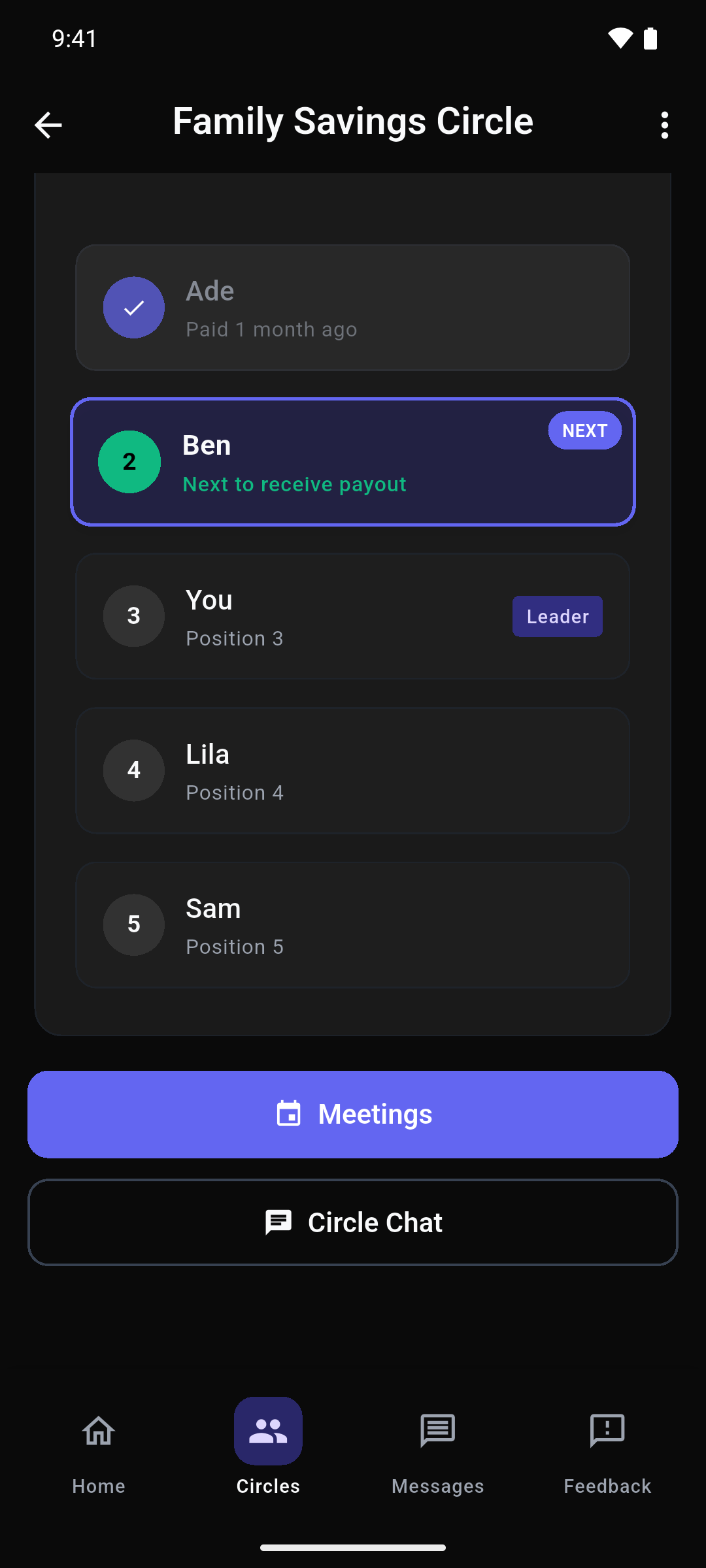
The questions answer themselves, because the answers are in everyone's pocket. The chase gets lighter, because a hand that hasn't landed is visible to all — the record does the reminding before the banker has to.

And two things matter more here than anywhere else, so we'll say them plainly. Roscas never touches the money. Hands and draws move exactly as your pardner moves them now — cash, bank transfer, standing order. Nobody connects a bank account to join, nobody's money passes through us, and no one outside your circle takes a cut of anyone's draw. The banker never needed a bank; neither does the app. And Roscas is free — permanently. No fee per circle, no subscription, no charge appearing once you're settled in. A tradition that was built because the mainstream wanted too much from your community should not be charged rent by an app.
Roscas is currently in beta on Android, and we're inviting bankers and organisers to bring the pardner they already run — your members, your hand, your draw order, exactly as they stand.
Keep your circle. Lose the notebook. Get started at roscas.io/your-circle