Running an adashi? Keep your circle, lose the notebook
In most savings circles, the members trust each other. In a lot of adashi, they trust one person — and that person vouches for everyone else.
That single difference changes what the job is. It is worth spelling out, because almost nothing written about savings groups accounts for it.
What an adashi is, and who carries it
Adashi — also written adashe — is the Hausa word for a contribution group: a set of people who put in a fixed amount daily, weekly or monthly, with the whole pot going to one member at a time until everyone has taken a turn. No interest. No forms. No permission needed from anyone outside the group. It has been the working savings system of Northern Nigeria for generations, and it travelled: it runs today in Manchester, in London, in the university cities, in WhatsApp groups that stretch between Britain and Kano.
At the centre is the organiser, known in many groups as the uwar adashi — roughly, the mother of the adashi. She collects, she keeps the record, she decides the turn order, and she carries the reputation of the whole arrangement. Often she runs more than one adashi at the same time, for different groups of people, with different amounts and different dates.
This article is for her, and for anyone else who has ended up holding the book.
Trust that runs through the middle
Here is the part that makes adashi distinctive, and it is worth naming plainly.
In many circles, everybody knows everybody — the trust is spread across the group like a net. In a good many adashi, it isn't. Members may know only the uwar adashi. Some groups are run deliberately privately, because what a person does with their money is nobody else's business. When a member brings in someone new, the member is vouching for them: standing as their guarantor to the woman in the middle, not to a committee.
That shape has two consequences that every uwar adashi feels, even if she has never put words to them.
The record isn't admin — it is the circle. Where members don't all see each other, the book is the only place the adashi exists. There is no group memory to check it against.
Every gap lands on one reputation. If a date is wrong or a payment is unrecorded, the group cannot quietly correct it between themselves. It comes back to the person who vouched for everyone.
None of that is a weakness in the tradition. It is why adashi keeps working when banks won't, and why a good uwar adashi is one of the most trusted people in her community. But it does mean the bookkeeping deserves more care than it usually gets credit for.
Four habits that keep an adashi clean
These work on paper, in an exercise book, in a notes app — no software required.
Tell every member their own date, in writing, at the start. Even in a private adashi where the roster isn't shared, each person should have their collection month from you in a message they can scroll back to. Most disputes are not about money. They are about what two people remember differently.
Confirm every contribution the day it lands. One line back — received, recorded, thank you. It takes seconds and it closes the gap where doubt grows. Silence is where trust leaks.
Date everything, and keep it after the cycle ends. This is the habit people wish they had months later. A lump sum arriving in a bank account raises questions — from a mortgage adviser, a solicitor doing finance checks, sometimes the bank itself. A dated record of what you paid in, month by month, and when your turn came is far easier to explain than a memory of it. Keep your own copy as a member; keep the group's as the organiser.
Write down who vouched for whom. It is already how the adashi works. Putting it on paper costs nothing and makes the one genuinely awkward conversation — a member who has gone quiet — a conversation between two people who already agreed to be responsible for each other.
When the notebook starts to strain
One adashi of ten people is a notebook. Three adashi with different amounts and different dates, plus the messages, plus the questions, plus the mental arithmetic every time someone asks when is my month? — that is a job. Plenty of women do it brilliantly for twenty years. That doesn't mean it should cost them an evening a week.
Where Roscas comes in
Roscas is a free app for running the circle you already have.
It doesn't change your adashi. The amount stays what your group agreed. The turn order stays the order you decided. The uwar adashi stays the uwar adashi — still the centre point, still the one who vouches, just no longer the only person who can see the record. Each contribution is logged against a date, each turn is visible, and the answer to when is my month? stops being a question you have to answer personally.
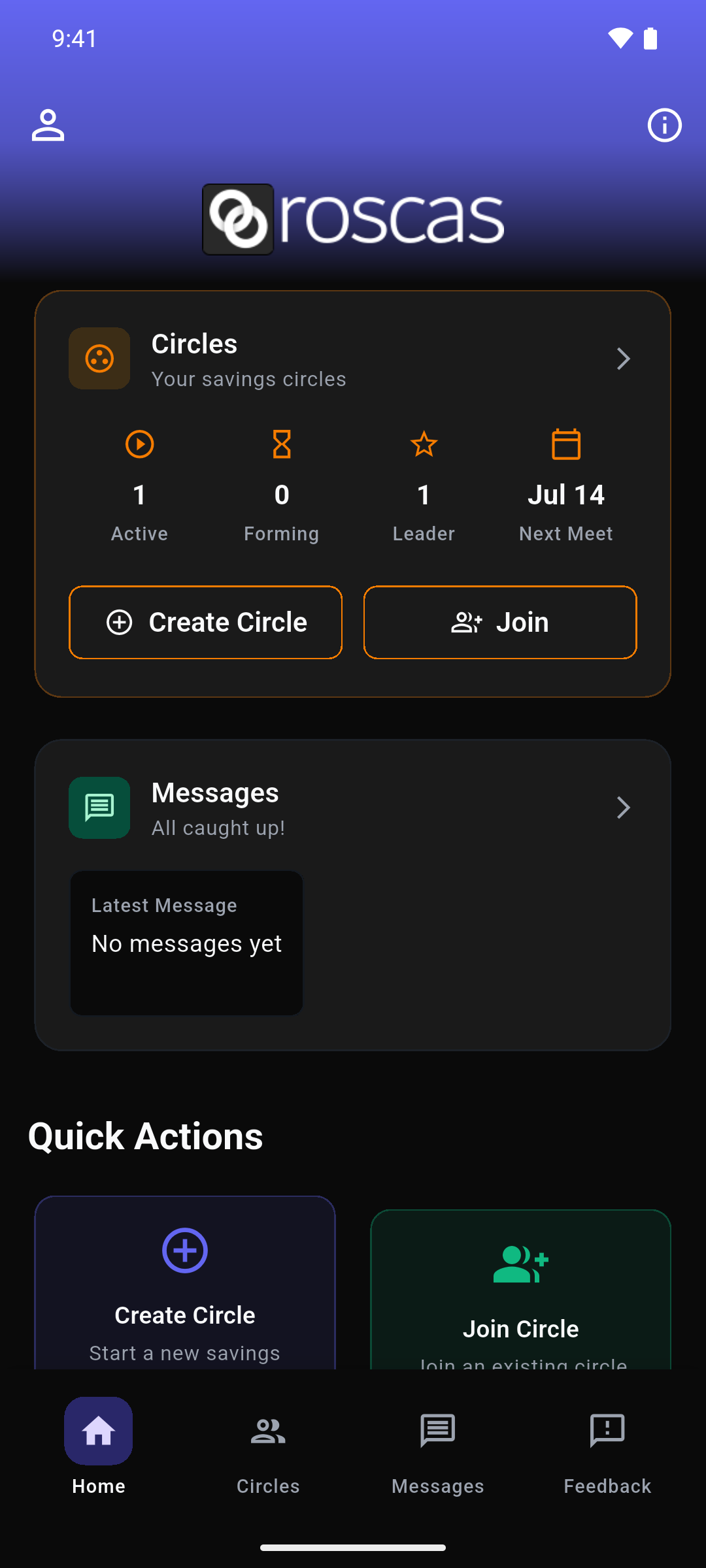
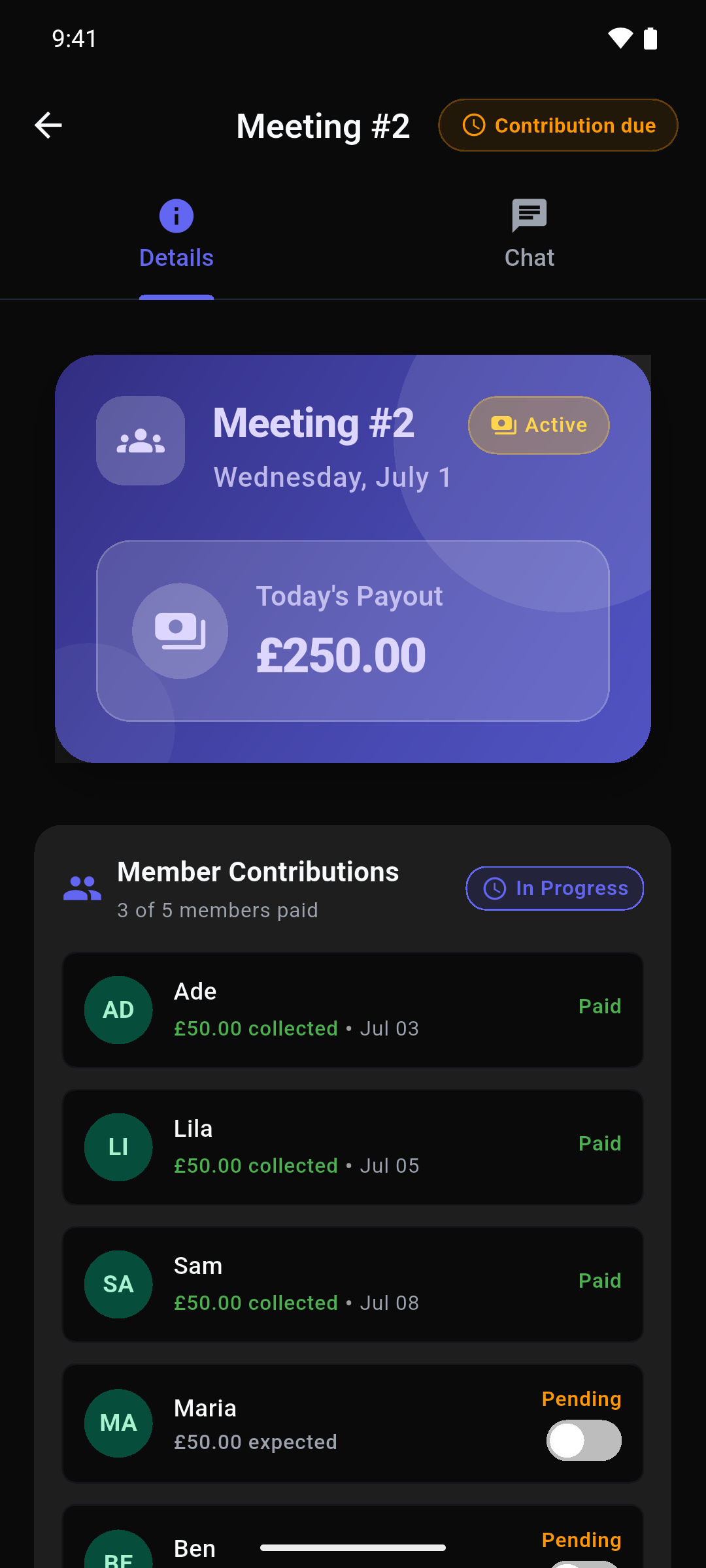
Two things matter more here than anywhere else, so we will say them plainly.
Roscas never touches the money. Contributions and payouts move exactly as your adashi moves them now — cash, bank transfer, standing order. Nobody connects a bank account to join, and no company sits between you and your members.
Roscas is free, permanently — for the organiser as well as the members. No fee per circle, no subscription, no charge appearing once you have settled in. A tradition built because the mainstream asked too much should not be charged rent by an app.
Roscas is in beta on Android, and we are inviting organisers to bring the adashi they already run — your members, your amount, your order, exactly as they stand.
Keep your circle. Lose the notebook. Get started at roscas.io/your-circle